
考古是甚麼東東?雖然人人都聽過「考古」這門學科,但未必人人都知道考古其實是要學甚麼。本地藝術家朱樂庭以「類考古」為創作理念,通過作品學習東亞古代文化,或者能夠引發我們對遺產保育和歷史敘述的認識與思考。
What is archaeology? Even though we have all heard of it as an academic discipline, it is not immediately clear to us what there is to be studied. Local artist Natalie Chu bases her works on what she calls a “demi-archaeological” approach, learning about ancient East Asian cultures in the process; will this inspire us to familiarise ourselves with and consider heritage conservation and historical narratives?
👆 封面圖片 Featured image:
勘探者地圖 The Explorer Map, 2025
水墨紙本拓印、木板
Ink rubbing on paper, wood board
尺寸可變 Size variable
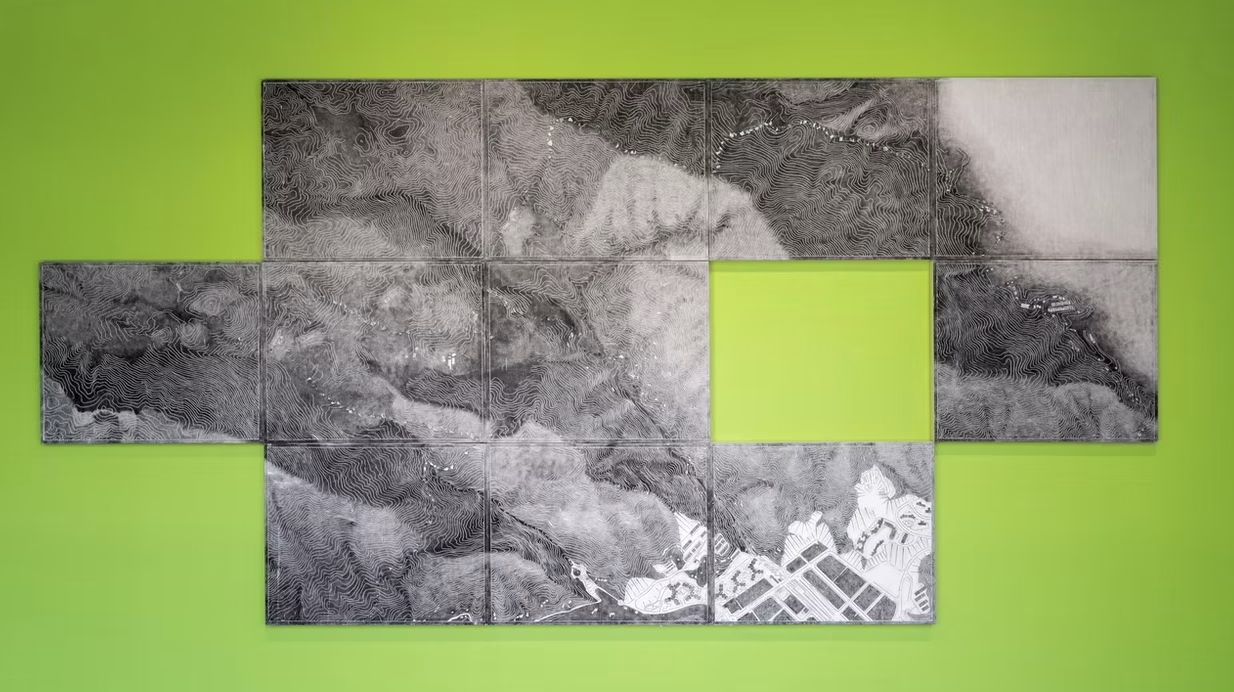
「類考古」的藝術 THE ART OF DEMI-ARCHAEOLOGY
所謂「類考古」,即是介乎正式考古與非正式考古之間的範圍。當然,除了挖掘恐龍化石的刻板印象外,考古學的研究還有不少分支,例如針對特定地方或年代的學科。就朱氏而言,香港本地以至大中華地區的文化歷史源遠流長,自然蘊含了豐富的創作素材。既然如此,我們暫且可以把這種創作手法稱為「藝術考古」,因為藝術家取於古代文化,用於現代藝術。
The so-called “demi-archaeological” approach lies between formal and informal archaeological studies. Of course, apart from its stereotypical excavation of dinosaur fossils, archaeology is sub-divided into branches with specific focus on the area or era. For Chu, Hong Kong and the Greater China region have a long history of culture, naturally containing rich creative inspirations. If so, then we may refer to this approach as “art-chaeology”, since the artist draws from ancient cultures and uses them in modern art.
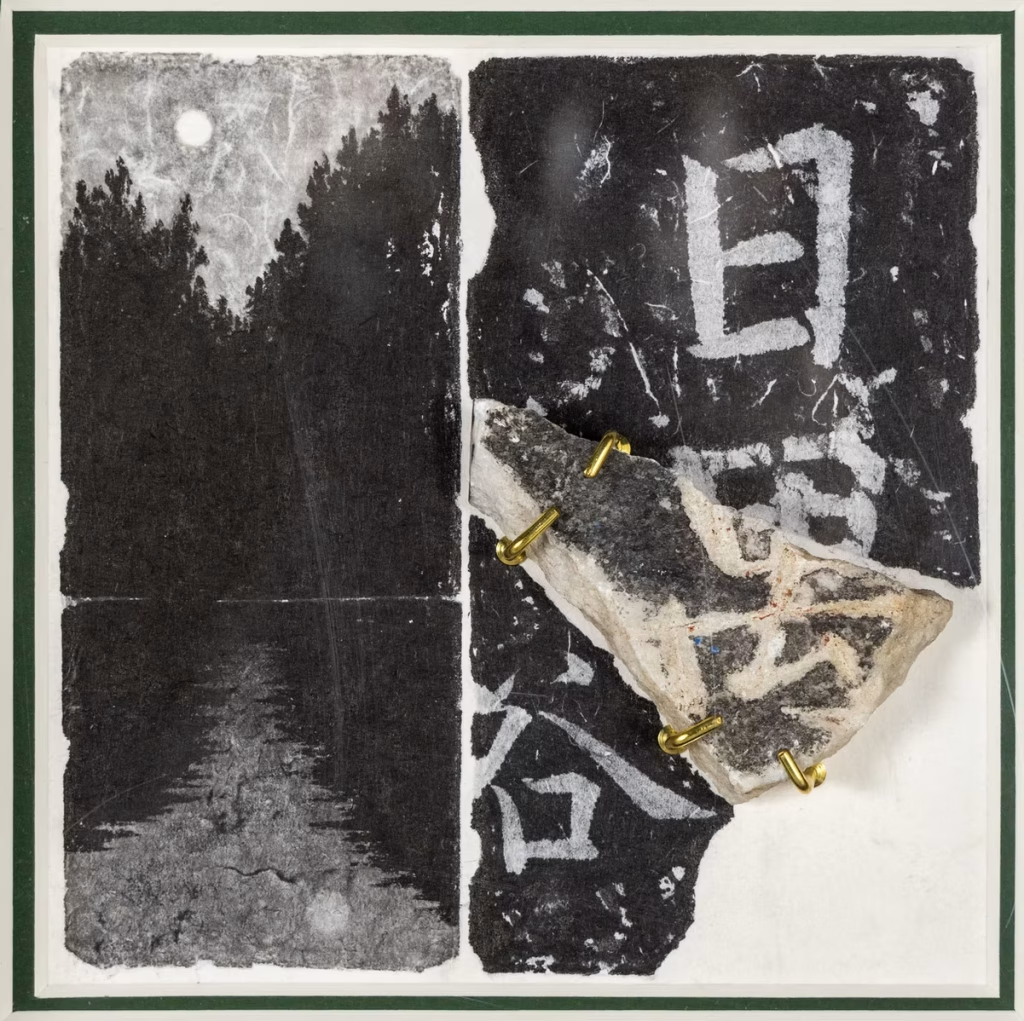
Imagining the Lacuna: jyu4, 2022
水墨紙本、殘碑碎片
Ink on paper, inscribed stele fragment
18 (26) x 18 (26) 厘米 cm (連框 Framed)
灰而不沉 GREY, NOT GLOOMY
乍看之下,藝術家的用色似乎相當單調,充斥着一種灰沉的感覺。此特色在較早期有關墓碑的作品中尤為明顯。誠然,朱氏對中國古文化情有獨鍾,不時引經據典,搭配水墨畫作,反思文字與傳統習俗(如掃墓、拜祭神明)背後的意義。
At first glance, the artist’s palette appears rather monotonous, imbued with a sense of grey. This characteristic is particularly evident in her earlier works depicting tombstones. Indeed, Chu is fascinated by ancient Chinese culture, frequently quoting classics and incorporating them into her ink paintings to reflect on the meaning behind texts and traditional practices, such as tomb sweeping and worshipping deities.
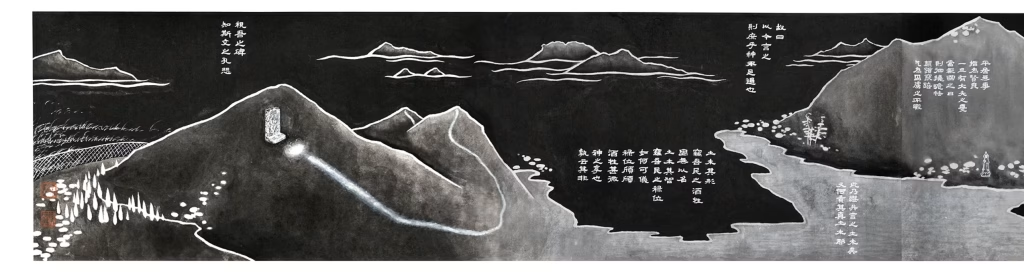
水墨設色紙本 Ink on paper
345 x 30 厘米 cm

水墨設色紙本 Ink and colour on paper
一組六件 A set of 6
One of 144 × 29 厘米 cm 一件
Two of 26 × 29 厘米 cm 兩件
Three of 200 × 29 厘米 cm 三件
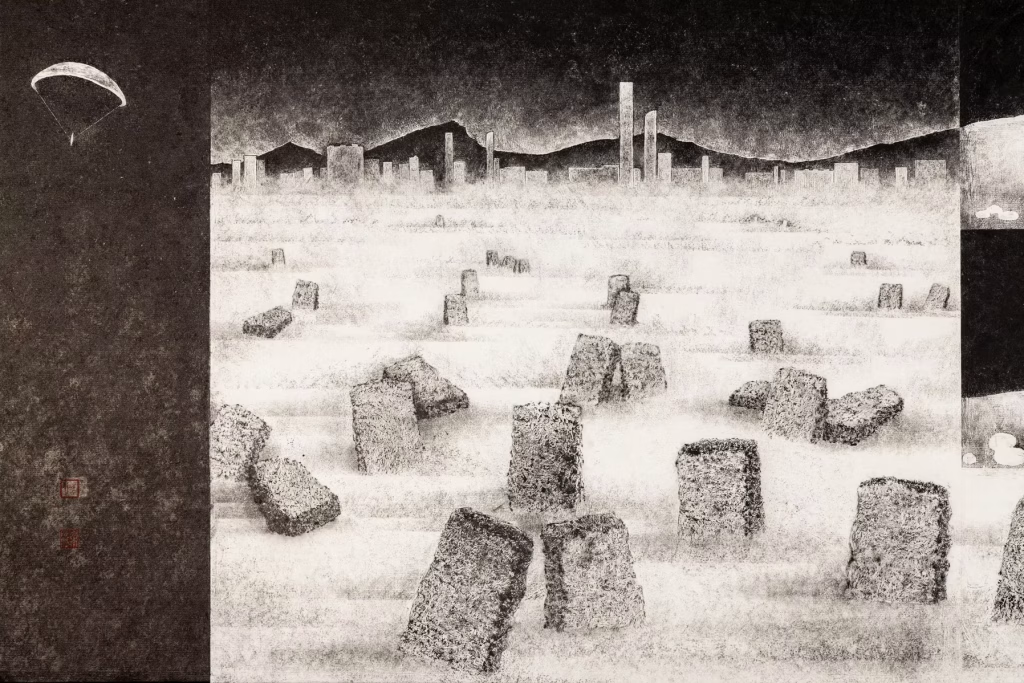
水墨拓印紙本 Ink rubbing on Chinese paper
68 x 210 厘米 cm
但灰色原來並不單調;黑白之間的種種灰色正正體現了道家所提倡的陰陽互補之說。朱氏一對《窈窈冥冥 昏昏默默》的山水畫即道出其心之所嚮:方圓虛實、明暗共生。藝術家在「類考古」的過程中,從古文化獲得精神食糧,所以作畫實為灰而不沉,更表達出積極調和、探索未知的願景。
However, grey is not monotonous; the various shades of grey between black and white embody the Taoist concept of yin and yang’s complementary nature. Chu’s pair of landscape paintings, Obscurity and Enigma, express her inner longing for the co-existence of square and circle, void and substance, and light and darkness. In this “demi-archaeological” process, the artist is spiritually nourished by ancient cultures, resulting in grey paintings that are not gloomy, and a positive desire to reconcile and explore the unknown.
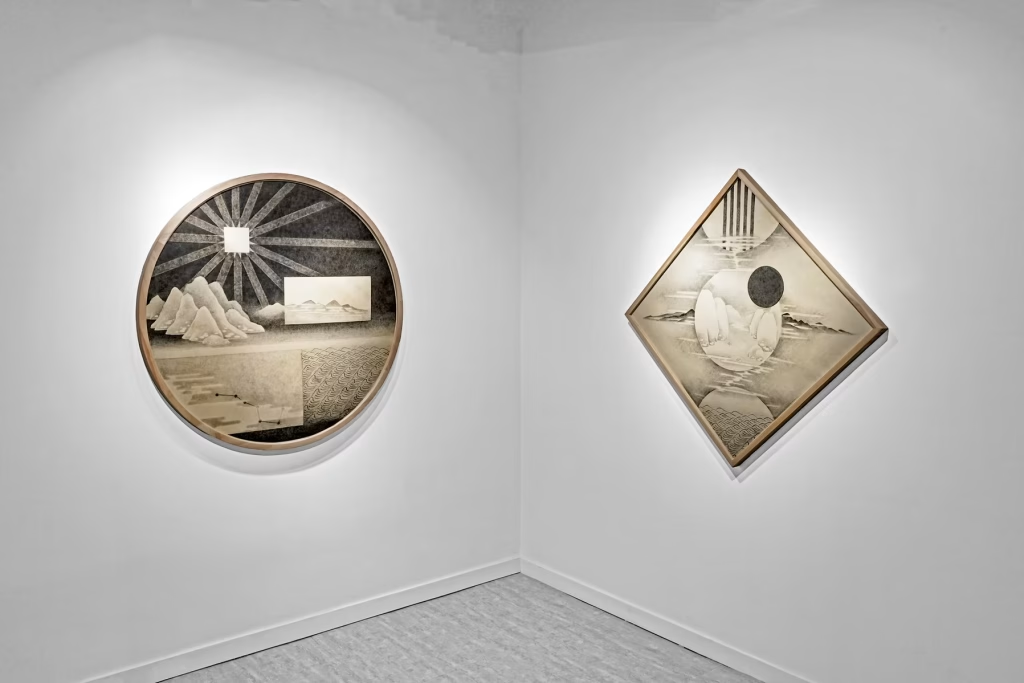
水墨拓印紙本 Ink rubbing on paper
直徑 Diameter of 97 厘米 cm
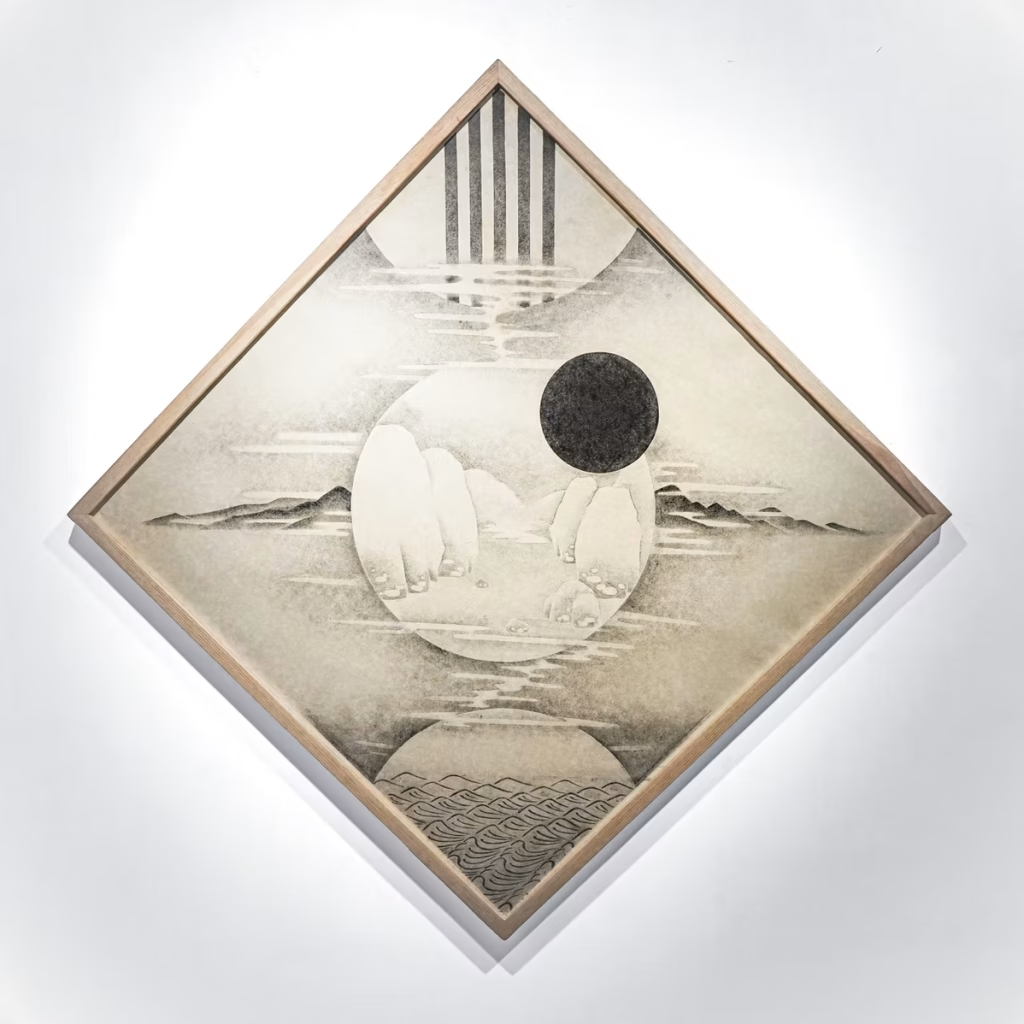
水墨拓印紙本 Ink rubbing on paper
71 x 71 厘米 cm
解構歷史、重塑文化 DECONSTRUCTING HISTORY AND RECONSTRUCTING CULTURE
「類考古」閾限與變化的本質,進一步見於藝術家擅長解構歷史敘述、重塑文化遺產保育交流的特點。一組兩件的《聖像》巧妙地改變了石觀音的形象,分別把表面特徵磨去和以其粉末倒模成立方體,直接挑戰大眾對傳統的認知。由此可見,藝術家並非盲目地崇尚古代文化,而是鼓勵我們質問不同的歷史觀點。
Furthermore, the liminal and transformative nature of “demi-archaeology” is seen in the artist’s strength to deconstruct historical narratives and reconstruct the discourse in conserving cultural heritage. A set of two Holy Statues cleverly change the image of the stone Guanyin, having its external features grinned off before re-casting the power into a cube, which directly challenges a public perception of tradition. Therefore, instead of blindly promoting ancient cultures, the artist encourages us to question different historical viewpoints.

石觀音像 Stone Guanyin statue
38 x 8 x 10 厘米 cm

觀音像粉末 Powder of the Guanyin statue
10 x 10 x 10 厘米 cm
究竟這是「考古」還是破舊、皆是抑或皆非?答案的重要性在於我們能否更有效地想像遺產保育的價值。以另一組五件的裝置藝術《再造頹垣:丘城》為例,藝術家運用中國傳統建築物料柱礎,以白水泥、玻璃等現代材料反襯之;不但造成超現實的效果,更提醒觀者今天高速發展的代價是被日漸遺忘的傳統工藝。朱氏深入探討城鄉、今昔差異,再通過藝術展示並重塑有關保育的對話,實在見證一份難能可貴的決心。
Is this “archaeology” or destruction, both or neither? The importance of the answer lies in whether we can imagine the value of heritage conservation more effectively. For example, in another set of five installations, Replica of Ruins: Deserted City, the artist utilises stone plinths, a traditional Chinese construction material, and juxtaposes it with modern materials including white cement and well-cut glass. Not only does this achieve a surreal effect, it also reminds the viewer of the price of today’s rapid development: a gradual loss of traditional handicraft. That Chu studies urban-rural and present-past divergences in depth, and presents her art in conversation with conservation, is a testament to greatly precious determination.
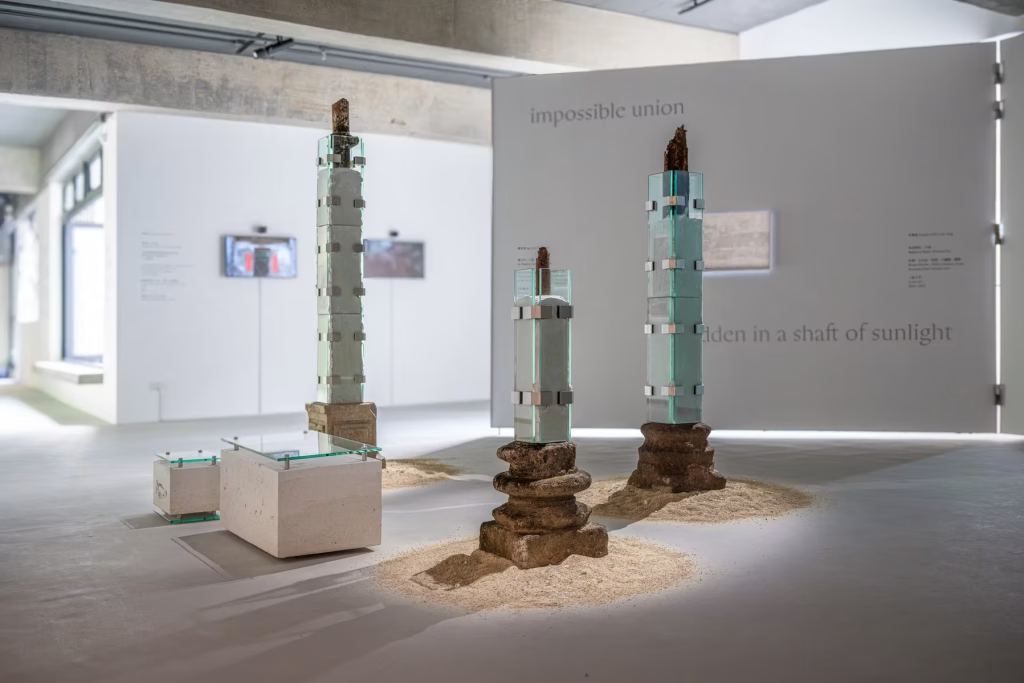
Replica of Ruins: Deserted City, 2024 – 25
柱礎、白水泥、玻璃、不鏽鋼、鏽鐵
Stone plinths , white cement, glass, stainless steel, rusted iron
一組五件 A set of 5
結語:我所看見的古今 CONCLUSION: EXCAVATING A FUTURE PAST
前陣子,日本漫畫家龍樹諒的作品《我所看見的未來》因其七月災難「預言」而爆紅,一度引起大眾的危機、防災意識。另一方面,在朱樂庭所看見的古代東亞之中,傳統文化也不斷遭受現代發展侵蝕,可謂一場悄然無聲的遺產災難。藝術家「類考古」的經驗說明:只要我們願意虛心地學習解構歷史並重塑文化敘述,便有可能在現今的社會兼顧發展和保育。畢竟,這是一個福禍相依的世界;雖然天空望落有點灰,但至少還未至於沉。你,又想看見怎樣的未來呢?
Earlier on, The Future I Saw by Japanese manga writer Ryo Tatsuki burst into popularity with its “prophecy” of a disaster in July, bringing public attention to crisis and disaster preparation. On the other hand, in the ancient East Asia that Natalie Chu sees, traditional culture has been encroached by modern development, just like a silent disaster for heritage. The artist’s experience with “demi-archaeology” shows that if we humbly learn to deconstruct history and reconstruct cultural narratives, then we may balance development and conservation in today’s society. After all, this is a world of interconnected blessings and calamities; although the sky looks a bit grey, it is not all gloomy. What about you — what is a future you want to see?
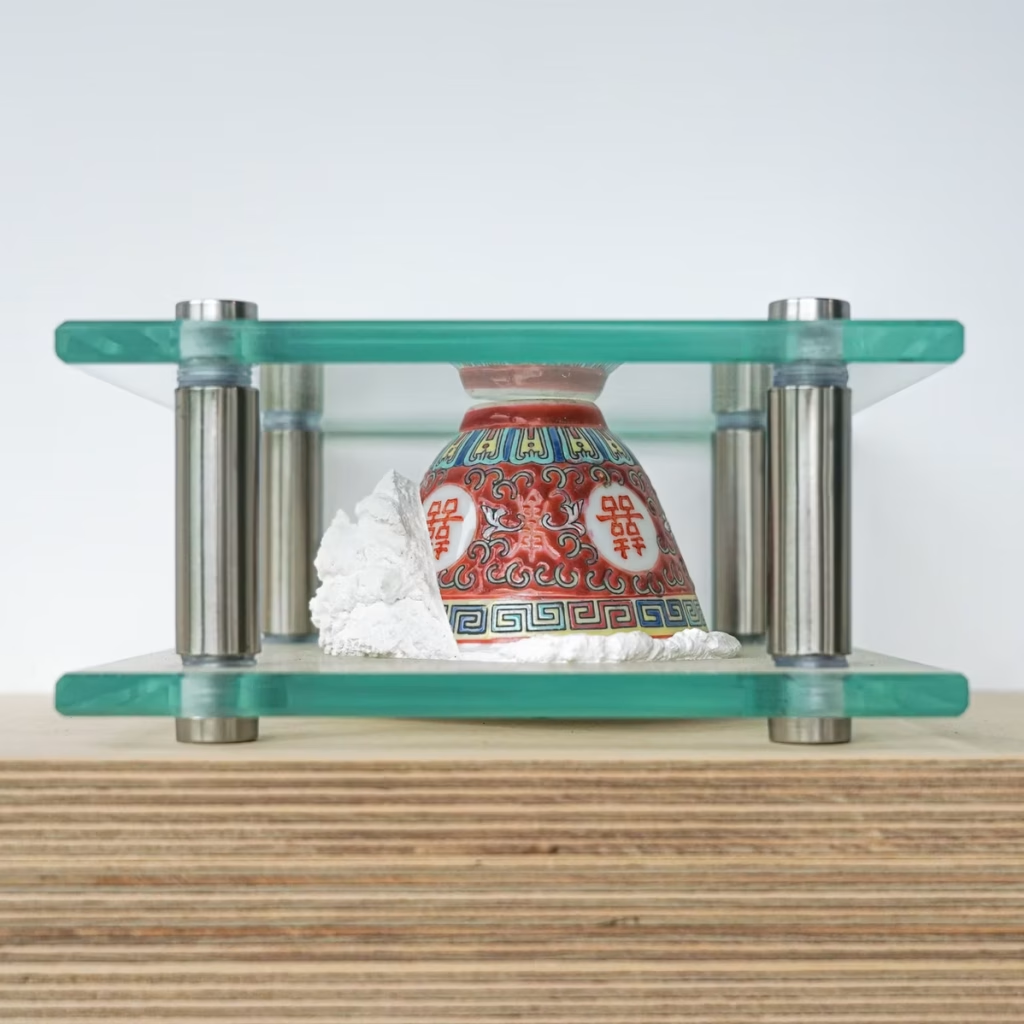
現成物、白水泥、玻璃、不鏽鋼
Found objects, white cement, glass, stainless steel
16 x 16 x 8.5 厘米 cm
關於藝術家 ABOUT THE ARTIST
朱樂庭 1999 年出生於香港,2022 年畢業於香港中文大學藝術系。朱氏對東亞古代藝術史與儀式深感興趣,從中發展出「類考古」和研究為本的創作。其作品關注現代社會中的文化遺產保育,以及歷史觀點之間的轉換,包括以現成物、檔案、文本和古物為媒介的裝置、雕塑與水墨畫。
Born in Hong Kong in 1999, Natalie Chu graduated from the Chinese University of Hong Kong in 2022, majoring in Fine Arts. Through keen interests in ancient East Asian art history and memorative rituals, Chu developed a “demi-archaeological” and research-based approach in her creations. Her works — including installations, sculptures and ink paintings made with found objects, archival materials, texts and antiquities — concern cultural heritage conservation in the modern era, and how individual memory and microhistories converge into a bigger picture.
藝術家的網站 The artist’s website:
🔗 https://www.nataliechu.com/
Instagram 上的藝術家 The artist on Instagram:
🔗 https://www.instagram.com/natfineartslie/
圖片由藝術家提供|Courtesy of the artist